Thank you for Subscribing to Construction Business Review Weekly Brief
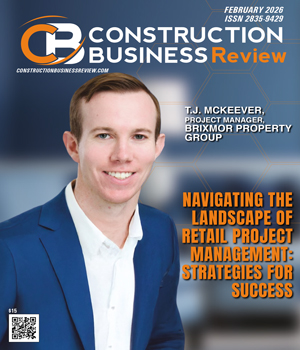
Brixmor Property Group
Navigating The Landscape Of Retail Project Management: Strategies For Success
T.J. McKeever is a civil engineer with extensive experience in commercial project management. Over the past five years, he has been a valuable member of Brixmor Property Group, focusing on Retail Project Management within the Tri-State area, encompassing New York, New Jersey, and Connecticut. In his role, T.J. manages projects from the initial stages of cost estimation and due diligence to turnover and completion. He oversees project budgets and schedules, ensuring that every decision made during the building process is quantifiable and aligned with the project's goals. His expertise and attention to detail contribute significantly to successfully executing retail projects in a highly competitive market. Through this article, T.J. McKeever shares his insights on effective retail project management, emphasizing the importance of utilizing technology tools like PlanGrid and Procore for tracking progress. He discusses risk management strategies and the role of digital twins in infrastructure projects. He advises young professionals, highlighting the value of on-site experience and proactive decision-making in navigating construction challenges. Essential Tools for Tracking Project Progress To ensure project milestones are met—most notably, opening on time—it's essential to stay updated on the latest project management technologies. My favorite tools include PlanGrid, Procore, Microsoft OneNote, eBuilder, and TrueLook Construction Site Cameras.
Architecture and Design Services
In a resounding testament to innovation, client dedication, and unparalleled expertise, F9 Productions has been crowned the Top Colorado Architecture and Design Firm of 2026 by Construction Business Review. This prestigious honor, drawn from enthusiastic subscriber nominations, rigorous expert evaluations, and an in-depth analysis of the firm’s stellar track record—including multiple award wins like the 2025 Best Architecture Firm in both Longmont and Denver by BusinessRate, the Architizer A+ Award, and consistent top rankings in BizWest’s Mercury 100—celebrates F9’s mastery in blending visionary design with seamless construction. With glowing client testimonials averaging near-perfect 5-star ratings across platforms like Google (142 combined reviews praising responsiveness and dreamrealization) and Houzz, F9 stands out for transforming Colorado’s diverse landscapes into enduring, personalized masterpieces that prioritize sustainability, transparency, and joy in every project. Colorado’s architectural landscape demands more than blueprints—it requires a profound harmony between human aspiration and the rugged beauty of the Rockies. F9 Productions, founded in 2009 by visionary principals Lance Cayko and Alex Gore, has mastered this art, earning its spot at the pinnacle through a client-first ethos that flips traditional architecture on its head. As Cayko explains in a recent interview, “We emphasize problem-solving first through our nine foundational principles, giving clients the highest levels of customer service in Colorado, built on a foundation of award-winning design.” These principles—ranging from “brilliant at the basics” to “extreme ownership” and “having fun”—guide daily team huddles where real-world challenges are tackled, ensuring every project runs like a well-oiled machine. What truly sets F9 apart is their revolutionary integrated design-build model, a rare “third type” that eliminates the fractures plaguing the industry. Unlike construction-led firms that sideline design or fragmented architecture teams that lose control post-concept, F9’s leaders—Cayko and Gore—personally steer both phases, from initial sketches to final walkthroughs. This continuity shines in projects like the sustainable Eastwatch retreat (featured in Builder Magazine) and the Johnson’s Corner renovation, which snagged a 2025 Architecture MasterPrize Honorable Mention for its masterful restoration and adaptive reuse. Clients rave about this approach: “F9 resolved building issues effortlessly where others faltered,” notes one testimonial, while another highlights how they “made thousands of decisions feel manageable and fun.”

Construction Consulting

Prevailing wage compliance rarely announces itself as a problem. It surfaces quietly when projects funding shifts, public dollars enter midstream, or subcontractors submit payroll that appears compliant but isn’t. Contractors don’t realize the risk until requirements multiply, documentation gaps emerge, and penalties feel suddenly unavoidable. Many know something is wrong but only a few know where to begin. That gap between obligation and understanding is where Naylor Construction Consulting (NCC) began. Before founding the firm, Marisa Van Wie, handled prevailing wage requirements inside a large contracting organization that few others understood. When personal circumstances forced a reevaluation of traditional site-based work, her expertise became leverage. Management made it clear: she was the only one who could manage the prevailing wage component of their projects. If she left to consult independently, they would hire her back in that capacity. That first engagement revealed something larger. If a well-resourced general contractor struggled to navigate prevailing wage compliance, other smaller firms and first-time public works participants were facing the same challenge. From that realization, NCC took shape, built around the idea that clients don’t need more regulations explained after the fact. They need structure before mistakes take hold.
Roofing and Siding Systems

The Art of Managing People
Rocky Plemons, Vice President of Construction, Integrated Services, Fluor Corporation
Construction Hiring

5 Tips for the Successful Hiring of Safety Professionals
Reid C. Lenhart CSP, Safety Director, Concrete Strategies
Roofing and Siding Systems

Walking the sustainability walk: The case for EPR
Brian King, EVP Marketing, Product Management and Sustainability, Advanced Drainage Systems, Inc. [NYSE: WMS]
Building Restoration and Maintenance

Making a Case for Young Leadership
Sara Marlow, Director of Architecture, CSM Corporation
Roofing and Siding Systems
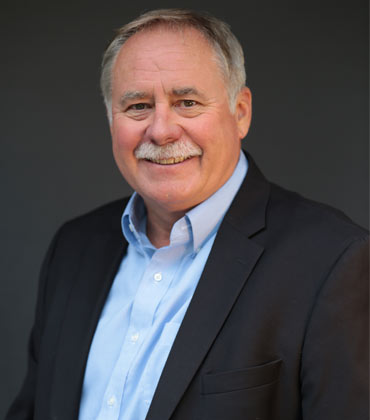
Disaster Recovery is a Team Sport
Jim Wills, Vice President of Business Development- GRS, Gilbane Building Company
Roofing and Siding Systems

Operational Leadership VS Field Leadership in the Utility Construction Business
Jarvis Lopez, Regional Safety Manager- Mastec Power Delivery East, Henkels & McCoy, Inc

IN MY OPINION
Construction and Bid Estimation
Construction Disruption Through Emerging Technologies
Gary Helminski, Executive Managing Director, Cushman & Wakefield

LAST WORD
Construction Engineering Services
The Stigma of Job Site Inspections
Richard R. Flores, Senior Safety Manager, Hathaway Dinwiddie
IN FOCUS

Achieving Construction Excellence: Leveraging Consultant Strategies for Success
Construction consulting firms reduce delays and overruns by combining early planning, active oversight, technology, and workforce strategies.

Architecture and Design: The Cornerstones of Digital Transformation in Construction
Architecture and design-led digital transformation enhances collaboration, reshaping construction delivery and competitiveness across complex projects.
EDITORIAL
Operational Precision in Architecture and Construction
Rising project complexity, heightened regulatory oversight, and increasing execution risk are reshaping expectations across the architecture, design, and construction landscape. Firms are being evaluated not only on creative or technical capability, but on their ability to deliver with precision, accountability, and consistency. Across the sector, leadership is increasingly defined by integrated delivery models, operational discipline, and outcomes that are predictable and measurable.
F9 Productions has been recognized as the Top Architecture and Design Firm in Colorado 2026. The firm distinguishes itself through a fully integrated design build structure that unifies architectural planning and construction execution under single point leadership from concept through completion. This alignment reduces fragmentation, shortens decision cycles, and safeguards design intent throughout delivery. By maintaining direct oversight across both phases, F9 achieves consistent performance across residential and commercial environments statewide, reinforcing its role as a dependable partner for clients seeking clarity and control in complex projects.
Also featured is Naylor Construction Consulting, named Top Construction Consulting Services 2026, for its structured and preventative approach to prevailing wage compliance. Rather than addressing compliance after issues arise, the firm embeds governance mechanisms directly within project lifecycles. Certified payroll review, subcontractor verification, and active oversight enable contractors to manage regulatory obligations proactively, reducing exposure to penalties and disruptions. This disciplined framework supports both established contractors and first time public works participants operating within demanding funding and labor requirements.
Industry perspectives further contextualize these developments. Gary Helminski, Director of Development, Executive Managing Director, at Cushman & Wakefield, outlines how technologies such as BIM, AI, IoT, and offsite construction are improving coordination, safety, and productivity amid labor shortages and cost pressures. Brian King, EVP Marketing, Product Management and Sustainability, at dvanced Drainage Systems, Inc. emphasizes the growing importance of extended producer responsibility and circular material strategies in advancing sustainability and long term resource efficiency.
These examples reveal today’s construction reality: competitive advantage stems from integration, foresight, and disciplined execution, setting performance and resilience benchmarks across the industry.
