
Thank you for Subscribing to Construction Business Review Weekly Brief

IC İçtaş Nükleer
Omer Faruk Altan, Construction Director of Nuclear Power Plant Reactor Buildings
Beyond Completion: Leadership Lessons From Finishing Bridge Cladding Under Live Traffic
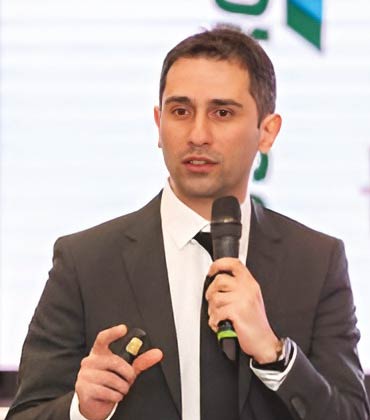
Omer Faruk Altan
When people see a bridge open to traffic, they naturally assume the project is finished. In reality, that is not always the case. Sometimes the most demanding work begins after the opening ceremony, when the remaining activities must be completed safely without affecting a structure that is already in service.
That was our experience during the final architectural cladding works on the Korabelny Bridge. By that stage, the bridge was already carrying live traffic, yet the aluminium cladding on the reinforced concrete pylons remained as a punch-list item. On paper, it appeared to be a relatively small package of work. In practice, it became one of the most challenging phases of the project.
Unlike a typical façade installation, this work had to be carried out on the exterior of the bridge pylons using rope access teams. Every activity took place at significant height while traffic continued to flow beneath us throughout the day. There was no margin for error. Every tool, fixing component and installation sequence had to be planned meticulously. Even a minor mistake could have had serious consequences.
The technical complexity, however, was only part of the challenge.
When I took responsibility for this phase, it quickly became clear that the biggest issue was not the cladding itself. The rope access team had lost confidence in the project and most of the original workforce had already left. The demanding working conditions, combined with the responsibility of working above live traffic, had affected morale and made it increasingly difficult to move the project forward.
“Completing the remaining work without disrupting traffic or experiencing a serious safety incident became the true measure of success.”
Replacing the team would probably have been the easier option, but I believed rebuilding confidence was the better one.
We divided the remaining work into realistic daily targets and carefully reviewed every operation before work began. Safety, weather conditions, access methods and material handling were discussed each day so that everyone clearly understood the plan before leaving the ground.
To provide stability and keep the team motivated under difficult site conditions, we introduced a daily payment schedule together with modest performance incentives linked to the safe completion of the planned work. More importantly, I spent time with the team every day, not only supervising the work but also listening to concerns, discussing each operation and sharing responsibility for the decisions we made together.
For rope access technicians, confidence in leadership is just as important as confidence in their equipment. Once the team saw that every decision was being made with safety as the highest priority, the atmosphere gradually changed. Communication improved, trust returned and productivity increased without compromising safety.
One lesson I have learned throughout my career is that leadership on complex construction projects is rarely about giving instructions. It is about creating an environment where experienced people can carry out difficult work with confidence. That requires preparation, consistency and a willingness to stand alongside your team when conditions become challenging.
The aluminium cladding was one of the final architectural elements of the bridge, but completing it required the same level of discipline as any major structural activity. Every installation had to be carefully coordinated because the bridge was already part of the city’s daily traffic network. Completing the remaining work without disrupting traffic or experiencing a serious safety incident became the true measure of success.
Looking back, I do not remember this project because of the aluminium panels alone. I remember the people who accepted the challenge, the meticulous planning behind every working day and the determination to complete a job that many considered exceptionally difficult under those conditions.
For me, this project reinforced a lesson that applies to every major construction project. Engineering expertise and technical knowledge are essential, but they are only part of the equation. Trust, teamwork and leadership are what transform difficult projects into successful ones. Sometimes the smallest remaining item on a punch list becomes the greatest test of a project team.
The articles from these contributors are based on their personal expertise and viewpoints, and do not necessarily reflect the opinions of their employers or affiliated organizations.
