Thank you for Subscribing to Construction Business Review Weekly Brief

Ørsted [CPH: ORSTED]
Matthieu Jaunatre, Head of Project Controls & Risk Management
Upskilling The Workforce for Safer Offshore Operations
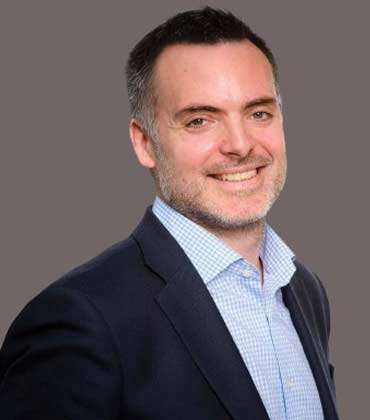
Matthieu Jaunatre
Matthieu Jaunatre is the Head of QHSE Europe at Ørsted, a global leader in offshore wind energy. With over 20 years of experience spanning nuclear, automotive and renewable industries, he has held various quality, health, safety and environment (QHSE) leadership roles across the full lifecycle of major energy infrastructure projects. Jaunatre began his career in civil and nuclear construction, developing expertise in stringent quality and safety standards. After transitioning to renewables in 2016, he now leads the QHSE function supporting Ørsted’s European wind farm development, construction and operations. An MBA graduate, Jaunatre blends technical knowledge with a passion for sustainable technologies and a people-first approach.
Through this article, Jaunatre shares his insights on the tremendous value and accelerated safety improvements that can be unlocked by offshore wind operators committing to proactively sharing remedies and lessons from incidents at their sites.
What are some of the challenges that you have seen and currently see when it comes to safety?
The offshore wind industry is still very young—you could argue the first major wind farms were built only a little over a decade ago. While we have gained valuable experience, a decade is not long in the grand scheme of developing comprehensive industry standards and best practices for quality, health, safety and environment (QHSE).
Some countries have no existing legal framework for offshore wind farm construction and operations because it’s an entirely new industry for them. They have to start from scratch in defining safety regulations. And you can’t simply take standards from other sectors like oil and gas and directly apply them—the supply chains and processes are too different. One of the key challenges is helping these newcomer countries develop the right QHSE regulatory foundations before starting to build and operate wind farms there. We need to collaborate with local suppliers, regulators and policymakers to put the proper QHSE guidelines in place from the outset.
But it goes beyond just regulations. We then have to provide extensive training to bring the local workforce up to those standards. Depending on the location, there can be a steep learning curve as we impart new skills and QHSE practices for offshore operations. The reality is our industry lacks the accumulated experience other sectors have benefited from over decades. We are building that collective knowledge in real time as we rapidly expand into new markets. And that inevitably exposes us to more risk in the short term before we have cemented best practices.
The positive side is that the learning curve, while steep initially, does progress quickly once we start implementing lessons from previous projects. Safety has to remain the top priority as we innovate and scale up this nascent industry at such a rapid pace. We must be disciplined to ensure we grow quickly yet safely without compromising standards in the pursuit of innovation.
Safety has to remain the top priority as we innovate and scale up this nascent industry at such a rapid pace. We must be disciplined to ensure we grow quickly yet safely without compromising standards in the pursuit of innovation.
Working offshore is inherently dangerous, so we have to intimately understand and respect those hazards. Extensive risk assessments, testing of new methods and continual refinement of our processes are critical before deploying any solutions in the field. It’s a constant balancing act between cautious implementation and aggressive innovation as we establish this industry for the long term.
What are the specific best practices that you have followed throughout your career to succeed in it?
Having worked nearly 15 years in the nuclear industry, I experienced firsthand how critical it is to openly share incidents and lessons learned across the entire sector. When something went wrong at one plant, those learnings were systematically distributed so every operator could apply that knowledge to enhance safety at their own facilities.
This willingness to transparently share information–even negative events–was one of the greatest strengths I took away from nuclear. Knowledge is only powerful if it’s proliferated rather than hoarded. It goes against the mindset that ‘knowledge is power’ by demonstrating knowledge shared exponentially increases value for all.
I don’t yet see that same level of cross-industry dissemination in offshore wind. While a competitive market, we could greatly benefit from being more open like nuclear. The nuclear industry has the International Atomic Energy Agency governing body that requires operators to share safety issues so everyone learns collectively.
We have some helpful industry associations like WindEurope examining safety topics and developing best practice guidelines. But we are not at the full maturity and trust level yet where companies automatically document and share learnings from incidents at their sites.
I try to advocate this mindset to my counterparts– let’s be more open about our experiences, even negative ones, so we can grow the industry’s safety competency together rather than keeping that knowledge siloed out of reputation or commercial concerns. Shared learnings from past mistakes are how we will exponentially improve safety standards and practices across the offshore wind.
We have an opportunity to bake that philosophy of transparency into our young industry’s DNA. The nuclear sector has shown that proactively sharing remedies to problems elevates safety for everyone much faster than each company having to repeatedly learn the same lessons individually. By prioritising that shared knowledge, we can accelerate building an exceptional safety culture.
From your experience, what advice would you give to young professionals who are looking forward to making a career in this industry?
Stay intensely curious–ask countless questions to people across the organisation to truly understand the bigger picture impacts of your work. When you are fresh out of school and eager to apply what you have learned, it’s easy to have a narrowly focused personal perspective.
Safety cannot exist in a vacuum or be done in isolation. It must be interwoven with the realities of those exposed to the risks daily. To effectively integrate safety into operations, you need to build bridges with the frontline workforce through earnest inquiry and authentic curiosity about their experiences.
Relentlessly seek out different viewpoints. Don’t make assumptions based on classroom theory alone. The only way to properly contextualise safety is to have open dialogues that allow you to walk a mile in their boots. Absorb the nuances of how your role tangibly affects their day-to-day reality. Remain enthusiastically inquisitive–it’s the advice I cannot emphasise enough.
The articles from these contributors are based on their personal expertise and viewpoints, and do not necessarily reflect the opinions of their employers or affiliated organizations.
