
Thank you for Subscribing to Construction Business Review Weekly Brief


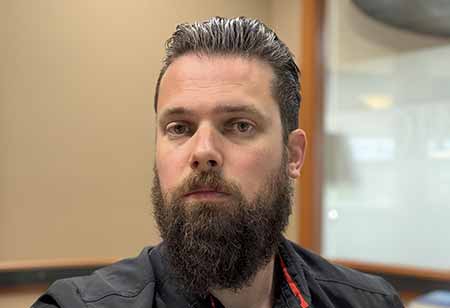
 Ron Peterson, President
Commercial wood-framing projects involve tight schedules, multiple trades, and constant coordination among structural systems. Decisions made early in planning often determine how smoothly a project moves once construction begins, particularly on large-scale developments where sequencing and alignment leave little room for adjustment.
For RJP Construction, that phase is where much of the work begins. Its approach centers on early involvement and integrated execution to reduce downstream risk. Founded in 1995 and licensed across multiple western states, the company has spent three decades expanding the way commercial wood framing looks when it enters a project at the preconstruction stage. The company works across the Mountain West on retail, hospitality, educational, and mixed-use developments, bringing framing expertise into value engineering, layout planning, and structural coordination long before concrete is poured. That upstream involvement is a consistent part of RJP's approach to projects.
How does early contractor involvement reduce downstream risks and coordination challenges in construction?
While most framing contractors enter after key design decisions are finalized, the company engages much earlier, before coordination issues are built into the plan. This approach has earned RJP recognition as a Top Commercial Wood Framing Company. Anchor bolt layout planning is where the impact of that approach is most visible. By generating detailed layout plans before construction begins, RJP identifies conflicts among framing, structural, and mechanical systems while they are still on paper.
“When we’re involved early, we’re not just reacting to plans—we’re helping shape how the project comes together,” says Ron Peterson, president. “That allows us to identify conflicts ahead of time, coordinate more effectively with other trades, and keep projects moving without unnecessary delays.”
When RJP identifies conflicts during early planning, it is resolved with simple adjustments. Once the slab is poured, those same issues become field modifications, schedule delays, and cost overruns across trades. By identifying these conflicts early in planning, the company prevents those downstream impacts and improves cost certainty.
Why is integrating multiple services within one organization important for project efficiency?
That upstream discipline connects directly to how RJP is structured. By operating commercial framing, crane services, timber fabrication, and prefabrication under one organization, the company coordinates critical aspects that most project teams navigate across multiple vendors. In-house crane services allow material picks to be scheduled around framing progress, reducing downtime. Prefabricated components arrive at required tolerances rather than being adjusted in the field. Internal integration reduces delays caused by fragmented vendors and misaligned schedules. The integration holds because of how accountability is distributed across RJP’s project teams. Foremen, superintendents, and project managers are responsible for decision-making and surfacing issues as they arise. Quality, safety, and communication are treated as individual responsibilities on every job, supporting consistent performance on large, fast-paced commercial structures.
In what way does prefabrication and technology improve consistency and on-site execution speed?
Technology reinforces that field accountability. RJP equips foremen with iPads, providing real-time access to drawings, layout plans, safety documentation, and change updates on site. Issues that would previously have required escalation and days of delay are identified and resolved as they arise, helping maintain alignment between what is designed and what gets built.
-
When we're involved early, we're not just reacting to plans-we're helping shape how the project comes together. That allows us to identify conflicts ahead of time, coordinate more effectively with other trades, and keep projects moving without unnecessary delays.
Technology reinforces that field accountability. RJP equips foremen with iPads, providing real-time access to drawings, layout plans, safety documentation, and change updates on site. Issues that would previously have required escalation and days of delay are identified and resolved as they arise, helping maintain alignment between what is designed and what gets built.
RJP’s timber framing division applies the same controlled approach to work that demands precision. Detailed fabrication is done in the shop before materials reach the site, preserving structural and aesthetic integrity while reducing installation time. Seismic upgrade projects extend that same preconstruction-informed approach into less predictable conditions. Unlike new construction, seismic work involves existing structures whose condition becomes clear only during execution. Experience in preconstruction informs how supervisors assess changing conditions and adjust installation methods in real time without compromising safety or schedule.
Prefabrication continues to play an increasingly important role in how RJP delivers projects. Completing more work in controlled environments improves consistency, reduces waste, and shortens on-site installation timelines. It extends the same early planning and coordination approach that defines the company’s model and supports more predictable execution across complex builds.
Three decades in the Mountain West have reinforced a consistent position: enter earlier, bring key coordination elements together within one team, and place accountability where the work happens. For clients navigating complex commercial builds, this is what they rely on when projects demand both precision and adaptability.
Deep Dive
Choosing a Commercial Wood Framing Partner for Complex Builds
Commercial wood framing has moved beyond a narrowly defined trade into a coordination-intensive discipline that sits at the intersection of design intent, schedule pressure and multi-trade execution. Developers and general contractors now operate in an environment where compressed timelines and increasingly intricate building requirements leave little room for downstream correction. Success is less dependent on installation speed alone and more on how early decisions shape cost certainty and sequencing across the project lifecycle.
A consistent pattern across high-performing projects is the depth of involvement before physical construction begins. Firms that engage during early planning phases tend to surface conflicts that would otherwise appear during execution, when resolution becomes expensive and disruptive. Detailed layout planning, coordination with structural and concrete elements and early-stage modeling reduce ambiguity and allow downstream trades to work from a clearer foundation. This shift toward front-loaded collaboration reflects a broader expectation among project owners for accountability that begins well before materials arrive on site.
Execution discipline has also evolved in response to tighter coordination demands. Jobsite performance now depends on how effectively field teams interpret and act on real-time information. Access to updated drawings, change orders and safety documentation directly in the field reduces lag between decision and action, preventing small misalignments from escalating into schedule delays. The ability to resolve issues as they emerge, rather than after inspection cycles, has become a defining feature of projects that stay on track. Teams that combine strong communication practices with empowered supervision tend to maintain continuity even when conditions shift.
Another defining characteristic of reliable partners is the degree to which they control interconnected scopes of work. Fragmentation across vendors often introduces handoff delays, misaligned sequencing and inconsistent accountability. Firms that integrate services such as framing, layout planning, prefabrication and supporting logistics reduce these friction points by aligning decision-making within a single workflow. This integrated approach allows sequencing to be adjusted dynamically around actual site progress rather than predetermined assumptions, improving both predictability and efficiency.
Prefabrication has reinforced this shift by moving critical work into controlled environments where precision can be maintained and variability reduced. Pre-cut components and shop-based fabrication shorten installation timelines while improving consistency, particularly on projects with repetitive structural elements. As labor availability tightens and projects demand faster delivery, this approach continues to gain relevance, not as a standalone capability but as part of a broader planning-led execution model.
Taken together, these dynamics suggest that the most effective commercial wood framing partners are those that combine early coordination, disciplined field execution and integrated service delivery into a single, coherent process. The distinction lies less in individual capabilities and more in how consistently those capabilities align across the full project timeline.
RJP Construction reflects this model through its emphasis on early collaboration, integrated services, and coordinated execution. It brings together preconstruction planning, layout development, prefabrication, and on-site framing within a unified approach that improves coordination across trades. Its use of real-time field access to plans and updates supports faster issue resolution, while in-house capabilities across framing, crane services, and timber fabrication allow tighter control over sequencing and scheduling. This combination positions it as a partner capable of supporting projects from early coordination through final installation.
...Read more
