
CLOSE
  • Specialty Construction Europe
  • Roofing and Siding Systems
  • Doors and windows
  • HVAC
  • Steel Building APAC
  • Kitchen and Bath Europe
  • Construction Interiors
  • Construction Demolition and Recycling Europe
  • Construction MENA
  • Architectural Glass
  • Modular and Prefab Construction
  • Construction Engineering Services
  • Safety and Compliance Europe
  • Wall Systems
  • Waterproofing APAC
  • Flooring System
  • Forensic and Owners Representative
  • Startups APAC
  • Architectural Glass APAC
  • Roofing and Siding Systems Europe
  • Mechanical Electrical and Plumbing
  • Construction Bidding and Auctions
  • Architecture and Design Services
  • Concretes, Aggregates and Materials
  • Safety and Compliance APAC
  • Construction Demolition and Recycling APAC
  • Steel Building Europe
  • Construction Consulting
  • Roofing Systems APAC
  • Workforce Management and Staffing
  • Construction Latam
  • Construction Marketing
  • Modular Construction APAC
  • Modular Construction Canada
  • Construction Engineering MENA
  • Swimming Pool Construction
  • Construction Engineering Canada
  • Specialty Construction
  • Commercial Contractors
  • Scaffolding Contractors
  • Building Restoration and Maintenance
  • Doors and Windows Canada
  • Sustainable Construction APAC
  • Construction Law
  • Architectural Glass Canada
  • Building Information Modeling APAC
  • Construction Staffing
  • Insulation, Coating and Waterproofing
  • Cold Storage Construction Canada
  • Construction Management Canada
  • Swimming Pool Construction Canada
  • Scaffolding Canada
  • Flooring System APAC
  • Pre-Construction Services
  • Construction Staffing Europe
  • Precast Concrete Europe
  • Cold Storage Construction APAC
  • Apartment and Condominium Contractors Canada
  • MEP Canada
  • Foundation Construction Canada
  • Outdoor Construction
  • Construction Law APAC
  • Construction Saudi Arabia
  • MEP APAC
  • Decking Canada
  • Kitchen and Bath
  • Building Sealing Solutions Europe
  • Swimming Pool Construction APAC
  • Mould Remediation and Testing Europe
  • Mechanical Contractor Canada
  • Construction Consulting Europe
  • Construction Coating Europe
  • Landscaping Canada
  • Construction Management
  • Construction Management APAC
  • Flooring Systems Europe
  • Dummy
  • Commercial Contractors APAC
  • Commercial Contractors Europe
  • Concretes, Aggregates and Materials Europe
  • Concretes, Aggregates and Construction Materials APAC
  • Construction Cladding APAC
  • Concrete Canada
  • Residential Construction
  • Building Restoration and Maintenance Canada
  • Pre-Construction Services Europe
  • Outdoor Construction Europe
  • Construction Interiors Europe
  • Modular and Prefab Construction Europe
  • Buinding Restoration and Maintenance Europe
  • Construction Forensic and Owners Representative Europe
  • Professional Services
  • Structures
  • Systems
  • Roofing and Siding Systems Canada
  • Professional Services Canada
  • Structures Canada
  • Systems Canada
  • Professional Services Europe
  • Structures Europe
  • Systems Europe
Skip to: Curated Story Group 1
Construction Business Review
US
EUROPE
APAC
CANADA
MENA
LATAM
AUSTRALIA
About Us Conference Partner With Us
  • APAC
    • US
    • EUROPE
    • CANADA
    • AUSTRALIA
  • Sections
    Architectural Glass
    Building Information Modeling
    Cold Storage Construction
    Commercial Contractors
    Concretes, Aggregates and Construction Materials
    Construction Cladding
    Construction Demolition and Recycling
    Construction Law
    Construction Management
    Flooring System
    MEP
    Modular Construction
    Roofing Systems
    Safety and Compliance
    Startups
    Steel Building
    Sustainable Construction
    Swimming Pool Construction
    Waterproofing
  • Leadership Perspectives
  • Insights
  • News

Thank you for Subscribing to Construction Business Review Weekly Brief

Construction Engineering Services

Top Solutions
Allen & Major Associates: Building Projects through Integrated Thinking
Allen & Major Associates
Allen & Major Associates: Building Projects through Integrated Thinking
Philip Cordeiro, P.E., Principal
Allen & Major Associates operates with a simple idea: civil engineering projects work better when they are not broken into silos. The firm brings civil engineering, land surveying, landscape architecture, and environmental consulting together under one coordinated practice, aiming to reduce the disconnects that often slow down development work. The result is a process that feels more continuous, from early concept through permitting and construction.

What distinguishes the firm is not only the range of services it offers but the way those services interact. Rather than moving work between separate departments or outside consultants, the teams operate as one system. This structure helps reduce gaps between design intent and regulatory requirements, which is often where projects begin to lose time and momentum.

Built Around Direct Conversation

At Allen & Major Associates , communication begins at the principal level. Clients are not filtered through multiple layers before reaching decision-makers. Instead, they engage directly with the professionals responsible for guiding the work. This approach helps shorten response times and keeps project discussions grounded in practical realities rather than abstract handoffs.

The firm views this accessibility as essential rather than optional. Many of the projects it handles involve tight timelines, evolving regulatory conditions, and coordination across multiple stakeholders. Direct access to leadership allows decisions to be made faster and keeps the work aligned with client expectations.

Understanding Where Projects Get Stuck

Across most development projects, challenges tend to surface early in the permitting stage. Even when designs appear straightforward, regulatory pathways vary significantly across municipalities, and requirements can shift as reviews progress. Time and cost pressures often intensify these uncertainties.

Nicholas Dellacava, P.E., describes this clearly, “We’ve learned that permitting is a challenging effort for any of these projects. Time is always of the essence, and cost is always a major driver. We want to be the group that helps clients understand what permitting their projects really involves, develop a clear, cohesive schedule, one we can abide by, and one they can take to the bank.”

What stands out in this perspective is not just the difficulty of permitting, but the need for predictability in a process that rarely offers it. Clients are looking for clarity as much as approval.

Environmental Thinking Starts Earlier

Environmental consulting at Allen & Major Associates is not treated as a final checkpoint. It begins during due diligence, often before a design is fully developed. This early involvement helps identify constraints that might otherwise surface later in the process, when changes are more costly and disruptive.

By understanding environmental conditions upfront, the firm helps clients adjust plans before they become locked into fixed designs. This creates more flexibility in decision-making and reduces the likelihood of significant redesign work later in the project lifecycle.

Read more
KSM Engineering and Testing: Engineering Project Success from the Mysteries Beneath
KSM Engineering and Testing
KSM Engineering and Testing: Engineering Project Success from the Mysteries Beneath
Julie E. Keller, President
Why do subsurface conditions determine the long-term success of construction projects?

Before any structure rises, the ground beneath it quietly decides how successful that project will be. Soil conditions, bearing capacity, groundwater, and prior site use all determine whether the land is suited for a residential neighborhood, a municipal facility, a launch pad, or whether it is suitable for building at all. Turning those mysteries into reliable answers is what KSM Engineering and Testing has been doing across Florida for more than three decades.

KSM specializes in geotechnical engineering, construction materials testing, civil design consulting and special inspections. By collecting samples in the field, running them through its laboratories and having experienced engineers interpret the results, it delivers clear recommendations that allow owners, contractors and civil engineers to move forward with confidence.

“We bring clarity beneath the surface, turning dirt into understanding, guiding clients with ethics, expertise, and confidence so every project begins on solid ground,” says Julie E. Keller, President of KSM.

The company serves a broad range of clients, including residential contractors, municipal organizations, and commercial entities. Keller has found that diversifying both the workload and the client base is the most effective approach. This strategy keeps employees engaged by exposing them to varied projects and helps the firm maintain stability when activity in one sector slows.

36 Years of Subsurface Insight

How does historical site data improve geotechnical investigation accuracy before drilling begins?

Over the years, KSM has developed deep historical knowledge about sites throughout Florida, and that archive shapes how each new investigation begins. Before a drill rig ever leaves the yard, the team reviews prior boring logs, test results and project files from nearby sites, then studies historical aerial photographs to see how the property has changed over time. A site that used to be a grove, a borrow pit or a filled wetland can present very different challenges, and KSM prefers to arrive with an informed expectation of what lies below.
Read more
Pearls Construction: Where Every Project Tells a Story
Pearls Construction
Pearls Construction: Where Every Project Tells a Story
Khaled Hassan, CTO and Managing Member, Moustafa Aly, CEO and Managing Member
For every project there is a story that we narrate — It isn’t just words, it’s who we are. Every project we manage has its own journey, challenges, and wins,” says Khaled Hassan, CTO and Managing Member. “From concept to completion, we don’t just build, we narrate.”

Born from belief and built hand by hand, Pearls Construction grew into a global consultancy shaping projects and people across continents. Behind every structure there is a narrative, and at Pearls, storytelling is our foundation.

When Pearls Construction LLC began in 2017, there were no grand offices or financial backers, only two engineers with a vision that construction could be more meaningful. They believed it could be human, collaborative, and defined by purpose rather than size.

The name, Pearls, carries that same meaning; Rarity and carefully formed over time. From the earliest days, everything about Pearls was intentional: its approach to work, the culture it fostered and the respect it showed to every project it has touched.

From a small beginning in New York, with a single purchase order, the firm has since grown to operate across more than thirty U.S. states, with established offices in Washington, New Mexico, Egypt, and Dubai.

From then on, every opportunity was treated as both a challenge and a privilege. Growth followed naturally as Pearls began attracting engineers who shared the founders’ purpose. They weren’t just joining a company; they were writing a story. That early team set the foundation for professionalism and curiosity that has defined Pearls today.

No project is small or less important. We work on every project with the same dedication and seriousness.

Pearls Construction is a multidisciplinary consulting house that supports contractors, design-builders, and public agencies to deliver integrated project controls. Combining CPM scheduling, BIM, risk management, and safety planning under one responsive and responsible team.

“No project is small or less important. We work on every project with the same dedication and seriousness,” says Khaled. Today, Pearls has served over two hundred clients, most are returning partners, by continuously adapting to their needs and delivering what they value most: peace of mind and confidence.

Pearls grew steadily, while remaining grounded to its founding values of trust, and accountability, and remained centered on what sets Pearls apart; a commitment to people and the belief that every project has a story to tell.

As Pearls’ reputation grew, so did its impact. It was a leap that demonstrated the firm’s ability to scale without ever compromising quality. Each project added to its credibility, and recognition began to take shape quietly, in the words of those who worked with them.

A client in New Jersey noted, “You guys are really good at what you do, most of your schedules get approved right away.”Another in Pennsylvania praised “timely responses and constant support.”

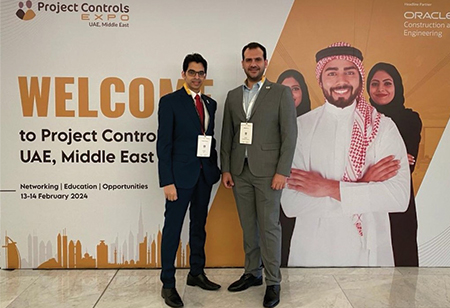
In 2023, Pearls attended the Chicago Build Expo, stepping confidently into a wider professional space. The goal wasn’t visibility, it was connection: strengthening relationships and learning from a changing industry.

Internally, Pearls refined its structure to support expansion while keeping responsiveness at its core. Growth has never meant distance. It means being closer, ensuring that every client feels seen, supported, and understood.

In 2024, Pearls crossed a new threshold by opening their first international office in Dubai. This move reflected not just ambition, but readiness and the capability to serve partners across continents while preserving the same values of collaboration and trust.

By 2025, the firm had expanded its expertise across (16) sectors, from infrastructure and transportation to utilities, treatment plants, and marine works. Through this growth, Pearls has remained grounded in its guiding philosophy: to understand before execution, to build relationships before structures, and narrate stories.
Read more
State of Industry

Civil Engineering and Environmental Consulting Firms Advancing Sustainable Infrastructure Solutions

Civil engineering and environmental consulting firms improve infrastructure planning, environmental compliance, sustainability and smart technology-driven development worldwide.

Civil engineering and environmental consulting firms play an essential role in supporting modern infrastructure development, environmental protection, and sustainable urban growth.  Modern infrastructure development requires far more than traditional engineering capabilities, as projects must now address climate resilience, environmental responsibility, population growth, resource efficiency, and increasingly stringent regulatory requirements. These firms help organizations navigate these evolving challenges by delivering technically advanced and environmentally responsible solutions that improve operational performance while supporting long-term sustainability goals.

Infrastructure Planning and Engineering Supporting Sustainable Growth

One of the primary responsibilities of civil engineering and environmental consulting firms is supporting infrastructure planning and engineering development for rapidly expanding urban and industrial environments. Population growth, urbanization, and economic expansion are increasing pressure on transportation systems, utilities, water resources, and public infrastructure worldwide. Consulting firms help governments and private organizations design infrastructure systems that can support long-term demand while improving efficiency, resilience, and environmental sustainability.

Transportation infrastructure remains one of the largest areas of focus within the engineering sector. Civil engineering firms provide planning, design, and project management services for highways, bridges, rail systems, airports, ports, and public transit networks, thereby strengthening regional connectivity and economic development.

Advanced modeling software, digital engineering platforms, and geographic information systems allow engineers to optimize transportation designs while reducing environmental impacts, operational risks, and construction costs. Smart transportation technologies are also becoming increasingly important as cities invest in intelligent traffic systems, electric vehicle infrastructure, and sustainable mobility solutions.

Water infrastructure development is another major area of importance for consulting firms. Growing populations, climate change concerns, and aging utility systems are creating increasing demand for modern water treatment facilities, wastewater management systems, stormwater infrastructure, flood protection projects, and water distribution networks. Civil engineering and environmental consulting firms help municipalities and industrial operators develop efficient water management systems that conserve resources while protecting environmental quality and public health.

Renewable energy projects are also creating significant opportunities for engineering and environmental consulting firms. Solar energy facilities, wind farms, hydroelectric projects, battery storage systems, and sustainable industrial developments require highly specialized engineering expertise, as well as support for environmental planning and regulatory compliance. Consulting firms assist clients with site evaluations, environmental studies, infrastructure design, permitting processes, and sustainability assessments that help organizations achieve operational and environmental performance objectives.

Environmental Compliance and Risk Management Supporting Sustainability

Civil engineering and environmental consulting firms help organizations manage environmental risks, maintain regulatory compliance, and minimize the ecological impact of development projects throughout planning, construction, and operational phases. Environmental impact assessments play a critical role in infrastructure development projects.

These firms conduct detailed studies to evaluate how proposed projects may affect ecosystems, wildlife habitats, water resources, air quality, soil conditions, and surrounding communities. Effective environmental planning enhances transparency among government agencies, project developers, environmental organizations, and local communities, thereby reducing the likelihood of project delays and compliance violations.

Climate resilience planning is becoming increasingly important within modern infrastructure development strategies. Extreme weather events, rising sea levels, flooding, droughts, and other climate-related challenges are placing greater pressure on infrastructure systems worldwide.

Civil engineering and environmental consulting firms help organizations design infrastructure that withstands environmental stress while maintaining operational reliability over long periods. Risk assessment tools, environmental simulation models, and predictive analytics technologies allow consultants to identify infrastructure vulnerabilities and develop adaptive engineering strategies that improve resilience and reduce long-term operational risks.

Many industrial redevelopment projects involve contaminated land, groundwater pollution, hazardous waste management, or abandoned industrial facilities that require specialized environmental cleanup strategies before redevelopment can occur. Consulting firms develop remediation plans, contamination-monitoring programs, soil treatment systems, and environmental restoration frameworks to help organizations safely restore sites for future residential, commercial, or industrial use.

Digital Technologies Transforming Engineering and Environmental Consulting

Technology innovation is significantly transforming how civil engineering and environmental consulting firms manage projects, analyze environmental conditions, and deliver infrastructure solutions. Digital engineering platforms, automation systems, artificial intelligence, cloud-based collaboration tools, and advanced data analytics technologies are improving project efficiency, design accuracy, and operational decision-making across the infrastructure sector.

BIM platforms allow engineers, architects, contractors, environmental specialists, and project stakeholders to collaborate within integrated digital environments that improve coordination throughout project lifecycles. Digital models help identify design conflicts early, optimize construction scheduling, improve cost management, and support long-term infrastructure maintenance planning.

Geographic information systems, drones, remote sensing technologies, LiDAR mapping tools, and satellite imaging systems are also becoming increasingly important for infrastructure planning and environmental analysis. These technologies allow consulting firms to collect highly accurate site data, monitor construction progress, evaluate environmental conditions, and improve project management capabilities. Real-time monitoring systems can track air quality, water conditions, structural performance, and environmental impacts more efficiently while supporting compliance reporting and operational oversight.

AI-powered systems can analyze large volumes of engineering, environmental, and operational data to identify project risks, optimize resource allocation, forecast maintenance requirements, and improve long-term infrastructure performance. Smart infrastructure technologies integrated with IoT systems are enabling more efficient transportation management, utility operations, environmental monitoring, and urban planning strategies across rapidly growing communities.


Read more

Geotechnical Solutions for Sustainable Infrastructure Development

Geotechnical engineering services provide essential support for precise design, enhance cost-effectiveness, and contribute to increased project reliability.

Infrastructure expansion and urban development are placing greater emphasis on reliable site evaluation and ground stability. In response, geotechnical engineering services are playing an increasingly vital role in supporting safe and efficient construction across transportation, energy, and commercial development projects. Advanced soil investigation methods, improved subsurface analysis tools, and digital modeling technologies are enabling engineers to understand ground conditions better before construction begins. These capabilities are helping project planners reduce structural risks, optimize foundation designs, and ensure long-term durability for large-scale developments.

Sustainability is also becoming a key consideration as infrastructure projects move toward environmentally responsible practices. Geotechnical engineering services are contributing to this shift by promoting solutions that minimize land disturbance, manage groundwater impacts, and support environmentally stable construction techniques. At the same time, growing project complexity and climate-related concerns such as soil erosion and ground movement continue to present challenges. To address these issues, engineering teams are strengthening field investigation techniques and adopting data-driven analysis methods that improve decision-making while maintaining safety and environmental balance across modern construction projects.

Evolving Market Landscape of Geotechnical Engineering Services

The market environment for geotechnical engineering services is evolving rapidly as construction and infrastructure projects become more complex and geographically diverse. Expanding urban centers, large transportation corridors, and energy developments are creating demand for detailed ground assessments that support long-term structural stability. As projects extend into challenging terrains such as coastal zones, mountainous regions, and densely populated cities, engineering firms are strengthening their capabilities to evaluate varying soil and rock conditions. This growing demand is encouraging service providers to broaden their expertise and offer comprehensive geotechnical solutions that align with the needs of modern infrastructure development.

Another key shift shaping the market landscape is the increasing integration of geotechnical expertise in the early stages of project planning. Developers and infrastructure authorities are recognizing the importance of thorough ground analysis before finalizing construction strategies. This early involvement helps identify potential ground-related risks, enabling project teams to refine designs, allocate resources efficiently, and avoid costly modifications during later phases of construction. As a result, geotechnical engineering firms are becoming more closely integrated with architects, structural engineers, and project developers throughout the planning and design process.

Growing expectations for accuracy, project transparency, and regulatory compliance also influence the competitive landscape. Governments and regulatory bodies are increasingly prioritizing safety standards and environmental accountability, particularly for large public infrastructure projects. In response, geotechnical engineering services providers are strengthening technical documentation, improving reporting practices, and adopting more precise site evaluation techniques. These developments are reinforcing the role of geotechnical professionals as essential contributors to responsible infrastructure development, ensuring that construction projects move forward with greater confidence in ground stability and long-term performance.

Technological Advancements Shaping Geotechnical Engineering Services

Technological innovation is steadily reshaping how geotechnical engineering services are delivered across modern construction and infrastructure projects. One of the most significant developments is the growing use of advanced ground imaging technologies that allow engineers to visualize subsurface conditions with far greater clarity. High-resolution geophysical surveying tools, along with ground-penetrating radar and remote sensing techniques, are enabling more precise identification of underground formations, voids, and geological irregularities. These capabilities allow project teams to gain a clearer understanding of complex terrain before major construction begins, improving planning accuracy and reducing unexpected structural complications during development.

Unmanned aerial systems and satellite-based mapping technologies are also playing a transformative role in site analysis. Drones equipped with high-definition imaging sensors are being deployed to capture detailed terrain data, particularly in difficult or hazardous locations. This aerial data supports the creation of accurate topographic maps and three-dimensional terrain models that help engineers assess slope stability, land deformation, and other ground-related conditions. By combining aerial imaging with advanced mapping software, engineering teams can evaluate project sites more efficiently while maintaining high levels of safety during field operations.

Another important advancement involves the increasing use of intelligent monitoring systems designed to track ground movement and structural behavior over time. Sensors embedded within soil layers, foundations, and surrounding infrastructure can continuously measure parameters such as settlement, vibration, and pressure changes. These monitoring networks provide engineers with ongoing insights into ground performance during and after construction activities. Early detection of unusual patterns allows engineering teams to implement corrective measures quickly, protecting nearby structures and maintaining long-term project stability.

Data integration platforms are further strengthening the capabilities of geotechnical engineering services by bringing together multiple streams of site information into unified analytical environments. Geographic information systems and advanced geospatial analysis tools allow engineers to interpret geological data, construction parameters, and environmental conditions within a single digital framework. This integrated approach improves collaboration among project stakeholders while supporting more informed engineering decisions. As infrastructure development continues to expand globally, these technological advancements are enabling geotechnical professionals to deliver more precise, efficient, and resilient ground engineering solutions.

Future Prospects and Opportunities

The outlook for geotechnical engineering services remains strong as global infrastructure investments continue to expand across transportation networks, renewable energy projects, and large-scale urban developments. Governments and private developers are placing greater emphasis on resilient infrastructure capable of withstanding environmental pressures and long-term operational demands. This shift is creating new opportunities for geotechnical specialists to contribute to complex construction initiatives such as offshore energy facilities, underground transit systems, and high-rise urban structures. With infrastructure projects becoming larger and more complex, the need for specialized ground engineering expertise is projected to rise consistently.

The growing focus on climate resilience and sustainable land development is also shaping emerging opportunities. Concerns related to extreme weather patterns, coastal changes, and environmental stability are encouraging infrastructure planners to incorporate stronger ground engineering strategies during project development. As a result, geotechnical engineering services are expected to play an increasingly important role in supporting safer and more resilient infrastructure in the years ahead.

Read more

Strategic Stewardship Across the Construction Lifecycle

Construction engineering management firms transform concepts into structures by overseeing project lifecycles, ensuring efficiency, safety, and sustainability through the application of advanced methodologies and technologies.

The modern construction engineering management firm operates at the nexus of intricate design, precise execution, and sophisticated oversight, orchestrating the transformation of concepts into tangible structures. These firms are pivotal in navigating the complex landscape of contemporary building and infrastructure development, ensuring projects are delivered efficiently, safely, and to the highest standards. Their expertise spans the entire project lifecycle, from initial ideation and feasibility assessment to planning, design coordination, construction supervision, and ultimate project closeout.

At its core, construction engineering management is about comprehensive project stewardship. This involves a deep understanding of engineering principles coupled with astute business acumen. Firms in this domain excel at integrating diverse disciplines, fostering collaboration among myriad stakeholders, and deploying advanced methodologies to optimize every facet of a project. They serve as the central nervous system, connecting clients, designers, contractors, suppliers, and regulatory bodies to ensure a cohesive and streamlined workflow.

Orchestrating the Project Lifecycle: From Concept to Completion

The initial phase of any project, encompassing conception and initiation, is where the foundational strength of a construction engineering management firm truly shines. This involves an assessment of a project's viability, including detailed feasibility studies that consider technical, economic, and environmental factors. Expert teams conduct in-depth site analysis, assess potential risks, and help define the project's scope, objectives, and preliminary budget. This early, rigorous evaluation is crucial for setting realistic expectations and establishing a solid roadmap for subsequent stages. It is in this phase that the seeds of efficiency and value are sown, often preventing costly adjustments later in the project lifecycle.

Following initiation, the planning phase takes center stage. Here, construction engineering management firms translate the project vision into a detailed, actionable plan. This involves developing comprehensive schedules, robust resource allocation strategies, and precise cost estimates. The creation of a well-defined project execution plan, encompassing procurement strategies and risk mitigation frameworks, is paramount. This intricate planning ensures that all necessary materials, equipment, and personnel are available precisely when needed, minimizing idle time and maximizing productivity. Advanced planning tools and methodologies are increasingly employed to model various scenarios, anticipate potential bottlenecks, and optimize workflows, leading to more predictable and successful outcomes.

The design coordination aspect is another cornerstone of these firms' capabilities. They act as facilitators, ensuring seamless communication and integration between architectural, structural, mechanical, electrical, and other specialist design teams. By proactively identifying and resolving potential conflicts or inconsistencies in designs, they prevent costly rework during construction. Their understanding of constructability allows them to provide invaluable input to designers, recommending solutions that are not only aesthetically pleasing and functionally sound but also practical and efficient to build. This collaborative approach leads to designs that are optimized for both performance and construction efficiency.

As projects move into the execution phase, construction engineering management firms provide vigilant oversight and rigorous control. This includes supervising on-site activities, monitoring progress against the established schedule, and ensuring adherence to quality standards and safety protocols. They implement sophisticated tracking systems to monitor resource utilization, manage inventories, and control expenditures, ensuring projects remain within budgetary constraints. Regular progress reports and performance assessments are generated, providing real-time insights to all stakeholders and enabling proactive decision-making. Their presence on the ground ensures that planned efficiencies are realized and that any deviations from the plan are promptly addressed.

Leveraging Technology for Enhanced Project Delivery

A significant transformation is sweeping across the industry, and it is being keenly embraced by construction engineering management firms, with the pervasive integration of technology. Digital tools are reshaping every aspect of project delivery. Building Information Modeling (BIM) is a foundational technology that enables the creation of detailed 3D models, serving as a central repository for project data. BIM facilitates enhanced visualization, improved collaboration, and more accurate quantity take-offs. Beyond BIM, the adoption of advanced data analytics is revolutionizing decision-making. Firms are leveraging vast datasets from past projects and real-time operational information to generate predictive insights. This enables more precise forecasting of project timelines, costs, and potential issues, resulting in more informed and agile management.

The proliferation of Internet of Things (IoT) devices and sensors on construction sites is providing an unprecedented level of real-time data. This data, ranging from equipment performance and material tracking to environmental conditions, feeds into analytical platforms, enabling firms to monitor progress, identify inefficiencies, and enhance safety measures with greater precision. Drones are routinely employed for site surveying, progress monitoring, and volumetric analysis, offering rapid and accurate data collection from previously inaccessible vantage points. Robotics and automation are also making their mark, particularly in repetitive or hazardous tasks, promising increased efficiency and improved safety.

Embracing Sustainability and Shaping the Future of Built Environments

Another increasingly prominent theme is sustainability. Construction engineering management firms are at the forefront of integrating sustainable practices throughout the project lifecycle. This encompasses advising on the selection of eco-friendly materials with lower embodied energy, implementing energy-efficient building systems, and championing waste reduction and recycling initiatives. They play a crucial role in navigating green building certifications and ensuring projects meet evolving environmental standards. The focus is not just on the immediate construction phase but on the long-term operational efficiency and environmental footprint of the built asset. This commitment to sustainability reflects a broader industry imperative to create a more resilient and environmentally responsible built environment.

The future outlook for construction engineering management firms is characterized by continued technological integration and an ever-increasing emphasis on data-driven decision-making. The development of digital twins, virtual replicas of physical assets that evolve with the project, is poised to offer even deeper insights into performance and optimization throughout the asset's lifespan. AI and machine learning are expected to further enhance predictive capabilities, automate routine tasks, and facilitate generative design, potentially revolutionizing the speed and efficiency of project development.

Construction engineering management firms are evolving into highly sophisticated entities, combining traditional engineering expertise with cutting-edge technological prowess. They are instrumental in delivering complex projects that are not only structurally sound and aesthetically pleasing but also economically efficient, environmentally responsible, and technologically advanced. Their comprehensive approach, spanning the entire project lifecycle and embracing innovation, positions them as indispensable partners in shaping the built world of tomorrow.

Read more
Leadership Perspective
Crafting Exceptional Residential Environments
AMLI Residential
Crafting Exceptional Residential Environments
Desmond Shotwell, National Director of Renovations

Desmond Shotwell is the accomplished National Director of Renovations at AMLI Residential in Dallas, Texas. With over a decade of expertise in project management and design, his journey includes key roles as Senior Project Manager and Project Manager in asset management at StreetLights Residential. Desmond's proficiency in project plans, Smartsheet, procurement, negotiation, and creative development underscores his valuable contributions to building design and renovation.

Please briefly share your professional journey to becoming the National Director, highlighting essential experiences that prepared you for this role.

I embarked on my journey in the industry in 2006, initially employed as a groundskeeper while attending college. Observing the industry's rapid growth, I recognized an opportunity to acquire hands-on experience and transitioned towards maintenance. Swiftly progressing from a maintenance technician to a senior technician, I benefited greatly from the guidance of an exceptional mentor who assisted me in troubleshooting and handling larger projects involving mechanical and electrical work. After refining my skills, I moved into roles such as service manager and director of maintenance at Aspen Heights in Baton Rouge, Louisiana.

A pivotal moment in my career occurred in Columbia, where I successfully navigated a project delay, restoring stability to a chaotic situation within 14 months. With over a decade of experience in student housing, I explored the role of director of customer care in Denver. Subsequently, I rediscovered my passion for multifamily projects with StreetLights Residential. In positions ranging from warranty manager to senior asset management project manager, I gained extensive knowledge in architecture, design, and construction details.

Climbing the professional ladder, I assumed the design-build senior project manager role, overseeing teams nationwide and ensuring projects stay on course. For nearly two years now, I have proudly served as the National Director of Renovations at AMLI Residential, leveraging my wealth of experience to enhance and lead renovation projects nationwide.

As the National Director of Renovations at AMLI Residential, what are your key roles and responsibilities in managing and leading projects?

As the National Director of Renovations at AMLI Residential, I oversee renovation projects nationally, approaching them from a development design perspective. This role entails collaboration with architects, engineers, construction teams, and general contractors. My primary objectives are to streamline department processes, guarantee the production of high-quality construction drawings, and supervise material selection. Throughout the project lifecycle, from initiation to completion, I closely collaborate with contractors and onsite personnel, monitoring the project's ROI, expenditures, and overall budgetary and return performance. Daily challenges involve navigating material shortages and ensuring timely material deliveries.

[QUOTE1_Replace]

What prevalent challenges do you observe in the market when discussing renovations and roofing systems with clients and peers?

In discussions with various clients and industry peers, a predominant challenge revolves around the ongoing struggle to secure reliable contractors. The critical pain points include the quest for contractors to offer competitive pricing without compromising quality while adhering to project timelines. Reflecting on past experiences, scheduling has been particularly demanding, often hindered by delays in material acquisition and shortages in manpower.

Can you share a project success story, focusing on the challenge scope, implemented best practices, and notable before-and-after scenarios?

In project management, involving the contractor early in the design process has proven beneficial. Collaborating with them at critical milestones during the drawing phase allows real-time pricing checks, preventing budgetary challenges associated with wild guesses. This proactive approach minimizes scope creep and budget overruns. Having a contractor at the table is crucial because they bring construction expertise, enabling them to question design choices and assess the project's practicality. This collaborative effort ensures alignment between the design vision and budget constraints. Additionally, the contractor's industry relationships help anticipate and address material shortages, allowing for timely adjustments and informed decision-making to stay within budget and project timelines.

Looking ahead 12 to 18 months, what emerging trends, whether in best practices or technology, do you foresee in the roofing systems landscape?

In renovations, we have observed the impactful trend of utilizing Procore as a valuable resource. Implementing Procore in our renovation projects has significantly enhanced visibility and project tracking, providing real-time insights for all involved parties. This is particularly advantageous for national projects, facilitating seamless coordination and oversight, even remotely managing projects.

Regarding roofing systems, while the trends I have discussed are more general and applicable to overall renovation and construction practices, Procore continues to stand out as a technology. Moreover, a notable trend in our industry involves the centralization of roles and services. This shift towards centralization has influenced how we design our spaces, leading to smaller onsite teams and changes in the footprint of workspaces. As roles become more centralized, there is a noticeable increase in efficiency—a trend that we and our competitors are actively adopting to enhance overall operational effectiveness.

What would be your advice for your peers and aspiring professionals in the renovation space today?

A key piece of advice is prioritising thorough planning, particularly when embarking on office remodels. Ensure the precision of your plans and obtain buy-in from your company's operations teams to ensure a seamless flow of spaces. Consistently implement and apply lessons learned from previous projects. While each renovation project is unique, maintaining a repository of lessons learned streamlines processes, avoiding the necessity to start from scratch each time. High-quality drawings are crucial; although scope creep is unavoidable, the objective is to minimize its impact throughout the project.

Read more
The Advantages of Using BIM for Project Cost Estimating
Stellar
The Advantages of Using BIM for Project Cost Estimating
Kevin Keen, Director of Preconstruction

Building information modeling (BIM) technology is a revolutionary tool used by architecture, engineering, and construction (AEC) professionals. It improves overall project collaboration and communication across disciplines by transforming 2D paper-and-pencil concepts into virtual 3D models that decision-makers and end-users can interact with.

When renovating or designing a new food and beverage facility, one of BIM’s most beneficial applications is its ability to define scope in detail.

It's difficult to determine exact cost estimates early in a project due to supply chain volatility, material costs, labor wage rates, site conditions, and other variables. However, BIM software's granular capabilities can significantly improve the accuracy of those forecasts and track decision impacts throughout the process.

Why should food plant owners and decision-makers care about having a BIM project?

Food and beverage construction projects are highly complex, even when designed to bare minimum standards. Teams must make hundreds of calculated and precise decisions throughout the design and construction process to meet owner requirements efficiently and economically, all while adhering to strict government regulations for food-safe facilities. 

Predictability and visibility are high-value commodities, especially when discussing budgets. Overall, BIM platforms enable owners to make better-informed decisions about their resources and building design choices. Since BIM models are pliable, they allow reviewing parties to visualize and discuss various design options in real time and see how they will directly impact the final cost of construction prior to incurring a cost. Changes are automatically tracked, easily reversed, and do not require flipping through dozens of drawings to locate specific areas for discussion. 

With this advantage, BIM software can optimize operation costs down to the smallest detail, minimize construction rework and risks, increase productivity, and improve the overall quality of the final building.

Additionally, once a model is approved, material takeoffs can happen within minutes instead of hours or days. Traditionally, contractors use 2D drawings to perform manual calculations for building quantities, such as steel tonnage. Cost estimating software can directly extract parameters defined in the BIM modelto efficiently identify the scope needed to complete the project.

How does it work?

Without getting into extreme detail about what each button does, I can tell you there is building information underlying absolutely everything you see in a BIM model. 

Read more
Turning Tension into Trust: The Power of Customer Problems
Ruppert Landscape
Turning Tension into Trust: The Power of Customer Problems
Jeremy Clayton, Director of Project Management

With over three decades in the construction industry, Jeremy Clayton is committed to reinforcing best practices and standardizing processes. He focuses on training new employees and challenging professionals to achieve their goals. Jeremy has overseen major projects like the Dwight D. Eisenhower Memorial, Metropolitan Park, and the Cirrus and Cascade Towers. His dedication to improving project management techniques ensures top-level execution and customer satisfaction. He is currently the Director of Project Management at Ruppert Landscape.

When it comes to customer service, problems usually get a bad rap— they’re seen as roadblocks that slow things down or damage relationships. But the truth is, they don’t have to be. If we shift our perspective, problems can be great opportunities to grow, learn, and improve. When we tackle issues head-on and solve them, we turn tension into trust. These challenges often result in even stronger customer relationships than before.

Understanding the Value of Problems

Problems are not inherently detrimental; they offer a unique chance to engage more deeply with customers. When approached with the right mindset, problems can lead to exceptional value creation. Effectively addressing issues demonstrates a company’s commitment to customer satisfaction and ability to handle challenges, enhancing its reputation.

Enhancing Problem-Solving Skills

Effective problem-solving requires a set of essential skills. By enhancing these, a company can separate itself from the competition. These skills are:

• Preplanning: Anticipating potential issues and preparing strategies to address them.

• Communication: Clearly conveying information and expectations to customers and team members.

• Collaboration: Finding mutually beneficial solutions that satisfy both the customer and the company.

• Taking Ownership and Acting Decisively: Demonstrating accountability and resolving issues before they escalate.

By developing these skills, professionals can become their customers’ “go-to” resource, and the contractors trust them to handle any situation that arises.

[QUOTE1_Replace]

Case Study

Metropolitan Park Terraces: Transforming Amazon’s Headquarters

Amazon’s new Arlington, VA headquarters showcases an ambitious urban development project. It features two 22-story office towers, 65,000 square feet of retail space, and nearly four acres of public spaces. Ruppert Landscape was integral to this transformation, executing simultaneous installations on 20 terraces. These included soil and aggregate placement, an irrigation system, landscaping, and site amenities.

Navigating Challenges in Urban Development

One of the project’s most intricate aspects was its high-profile visibility and the necessity for intensive collaboration among multiple stakeholders. Amazon’s rigorous sustainability objectives set the tone, requiring precision and alignment across ownership, design teams, contractors, and subcontractors. The project called for unparalleled attention to detail, craftsmanship, and adherence to Amazon’s commitment to energy efficiency and environmental responsibility.

Innovative Problem-Solving in Action

Success on this project demanded a proactive, solution-oriented approach at every stage. In collaboration with the landscape architect and Amazon’s horticultural specialists, the purchasing team ensured that all plant materials adhered to specific size and variety requirements. The strategy involved extensive preplanning, including contracted growing, specimen tree tagging, and tightly scheduled deliveries to preserve material quality and minimize handling.

With numerous stakeholders involved, ranging from the owner and their horticultural team to the developer, architect, general contractor, and quality control personnel, the project required constant, multilayered communication. Weekly internal planning meetings and regular check-ins with subcontractors helped mitigate potential issues.

The project’s logistical complexities required a careful balance. Limited on-site storage space necessitated just-in-time material deliveries, scheduled weeks in advance. Daily scheduled meetings and impromptu coordination meetings with the general contractor and other trades, including concrete teams, paver installers, and façade crews, were essential to maintain efficiency. Collaboration extended to interior trades to ensure seamless material movement through the building.

Compressed timelines presented additional challenges, with delays from other trades pushing the project against a hard deadline. Ruppert Landscape responded by implementing extended work hours, including overtime and weekends. Proactively addressing these challenges reinforced the company’s reputation for reliability and adaptability, ensuring the project stayed on schedule and within budget.

Transforming Challenges into Opportunities

In every complex project, problems are inevitable, but they don’t have to become obstacles. Through robust planning, open communication, and strong collaboration, companies can transform problems into opportunities. By acting quickly, addressing issues effectively, and welcoming them as chances to grow, companies can strengthen customer relationships, enhance their reputation, and ultimately drive business success.

Read more

Construction Engineering Services Info

Q1
What Do Construction Equipment and Engineering Services Companies Do?
Top Construction Equipment & Engineering Services Companies support projects where equipment, site conditions, engineering decisions and on-ground execution need to function in coordination. Their services may include equipment planning, engineering reviews, testing, project controls, MEP coordination, design-build support and site-readiness assessments. For contractors, developers and public agencies, these companies help reduce uncertainty and improve preparedness before actual fieldwork begins.
Q2
Why Do These Companies Matter Now?
Top Construction Equipment & Engineering Services Companies play an important role as construction teams face tighter timelines, labor shortages, rising cost pressure and increasingly complex approval processes. Many project delays start with unclear drawings, inaccurate site information, equipment mismatches or late coordination between different trades. Strong engineering services providers help teams identify and resolve these issues early, before they turn into costly change orders, equipment downtime or failed inspections.
Q3
How Should Buyers Evaluate Construction Equipment and Engineering Services Companies?
Buyers should look beyond certifications and evaluate how the provider operates throughout the project lifecycle. Important factors include engineering expertise, field experience, responsiveness, documentation quality, familiarity with codes and the ability to coordinate effectively with contractors, architects and project owners. Top Construction Equipment & Engineering Services Companies are often measured by how well their recommendations perform under actual site conditions, rather than by presentation quality alone.
Q4
What Business Value Do These Providers Create?
The value of strong construction engineering services is often reflected in fewer rework cycles, smoother approvals, better equipment utilization and tighter control over scheduling risks. Providers that understand soil conditions, building systems, site logistics and equipment limitations can help prevent costly corrections once work is underway. Effective engineering support also improves coordination between design teams and field crews, especially when quick decisions are required during active construction.
Q5
How Are Technology and Technical Expertise Changing This Category?
Top Construction Equipment & Engineering Services Companies are increasingly using tools such as BIM, 3D scanning, energy modeling, project controls software and digital documentation to improve visibility across projects. While technology plays an important role, practical expertise still determines how useful that information becomes. A scan, model or report only adds value when it helps teams make informed decisions around access, sequencing, load conditions, safety requirements or inspection readiness.
Q6
What Should Construction Decision-Makers Prioritize When Comparing Providers?
Decision-makers should focus on how well a provider fits the project type, along with the strength of its engineering judgment, responsiveness in the field and clarity of documentation. Top Construction Equipment & Engineering Services Companies should be able to explain risks in practical terms, coordinate effectively across disciplines and support critical decisions before delays impact the jobsite. While pricing is important, unclear scoping or slow review processes can end up costing far more than the original service fee.
Construction Business Review
Follow on LinkedIn

About

  • Home
  • About Us

Stay Connected

  • Subscribe
  • Newsletter
  • Sitemap

Contact Us

  • editor@constructionbusinessreview.com
  • sales@constructionbusinessreview.com
  • marketing@constructionbusinessreview.com

Legal

  • Editorial Policy
  • Privacy Policy
  • Terms of Use

© 2026 Construction Business Review. All rights reserved. Headquartered in Fort Lauderdale, FL, USA.

This content is copyright protected

However, if you would like to share the information in this article, you may use the link below:

https://www.constructionbusinessreviewapac.com/s/construction-engineering-services

We use cookies on this website to enhance your user experience. By clicking any link on this page you are giving your consent for us to set cookies. More info

I agree