Thank you for Subscribing to Construction Business Review Weekly Brief

AECOM Hunt
Curtis Corley, Director of Safety - South
Building Strong Safety Cultures Across Complex Construction Projects
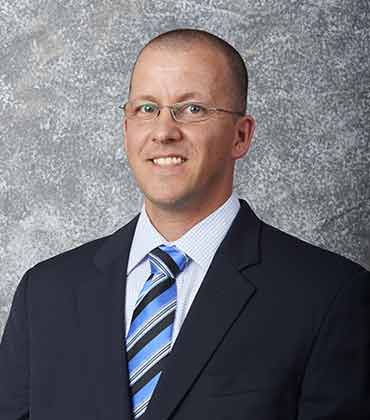
Curtis Corley
A Responsible Approach to Safety Leadership
I believe that safety leadership is a responsibility, not just a function. The best leaders own their outcomes, model behaviors and remove the obstacles that prevent their staff from achieving their full potential.
Some companies limit their employees from moving forward until given instructions. If the foreman understands the superintendent’s intent, essentially what is expected to be completed today and listed on the JHA/THA, the foreman should be afforded the flexibility to complete this task as they see fit. If the foreman and crew have been properly trained, then they should be able to execute the superintendent’s intent while doing it safely and productively.
On more complex projects, if every crew waits to move until they get explicit instructions from their supervisor to get going, they will continually stop or take shortcuts in order to finish. This will impact the schedule negatively, which typically results in negative safety outcomes as the priority shifts to meeting deadlines.
When crews understand stop-work triggers and when to escalate an issue versus trying to solve the problem in the field, this autonomous decision-making will build confidence and ultimately productivity over time. This also increases near-miss, incident and hazard reporting without blame, decreases SIF exposures, and increases trade partner alignment with safety policies.
Overcoming Safety Challenges in Construction
In my opinion, the biggest safety challenge that we currently face in the construction industry is the lack of new apprentices and new people entering the trades. This leads to the hiring of less experienced and less trained people on our projects.
To address this, new workers should be paired with more experienced mentors. High school students need to be educated on the fact that there is a good living to be made as a tradesperson, and that college isn’t the only form of higher education. Some of our best people worked their way up through the trades.
Balancing Operational Deadlines Against High Safety Standards
Planning is essential to balance operational deadlines while maintaining high safety standards. Teams don’t plan to fail; they fail to prioritize safety as part of the planning process and incorporate it into the work.
Safety leadership is a responsibility. The best leaders own their outcomes, model behaviors and remove the obstacles that prevent their staff from achieving their full potential.
I have never stopped a crew from working and discovered that their JHA/THA was inadequate. It’s always the crew where something is out of compliance. When you stop them and start asking questions and take a look at how they planned their work, the deficiencies start to reveal themselves.
It’s also better to prioritize the higher risk work earlier in the day, whenever possible, while the crew is less fatigued both physically and mentally and shift to the more mundane tasks in the afternoon.
Valuable Leadership Lessons in Safety Proactiveness
Teams that truly own their outcomes are the most successful. Blaming another trade for being in the way or encroaching on another trade’s workspace may be true, but there are likely other planning deficiencies occurring in the background, sometimes at the general contractor’s level.
One of the best trade partner teams I’ve had on the jobsite would consistently stay one step ahead of the trades around them. In the subcontractor coordination meeting, this sub would consistently caution the other trades and the general contractor regarding potential issues that need to be addressed. They would also explain how the potential impact would not only negatively impact them, but which trades nearby would be affected if a resolution wasn’t reached quickly.
Additionally, teams need to understand why things are done the way they are done, not just “We’ve always done it that way.” Supervisory personnel need to understand that they should put their ego to the side and ask themselves why a crew member might ask the question(s) they are asking. Teams that understand why and understand that their input matters will always outperform those that don’t.
Guidelines for Success in Workplace Safety and Risk Management
First, spend significant time in the field observing real work, talking to tradespeople and asking questions when you don’t know or don’t understand something. Your credibility grows in the field, not in the trailer.
Next, master the basics, mainly the Focus Four (falls, electrocution, struck by and caught between), as those are the big killers in construction. Know and understand the controls and communicate your expectations clearly.
Just because you are new doesn’t mean you can’t have influence. Integrate yourself into operations, and bring options, not just objections. Measure your leading and lagging metrics and look for constant improvement. Leadership goes up and down the chain of command, even in the case where people don’t actually report directly to you.
I’ve spent my career focusing on bridging the gap between operations and safety. Admit your mistakes and make sure you course correct to prevent a recurrence, just as you would expect a trade partner to make the same adjustment after an incident. Be a lifelong learner and earn more credentials, but stay humble.
The articles from these contributors are based on their personal expertise and viewpoints, and do not necessarily reflect the opinions of their employers or affiliated organizations.
Unlocking Your Potential: 5 Keys to Advancing Your Career in Property Management
Leanne C. Reynolds, Director, Property Management, Colliers [NASDAQ: CIGI]
-450x308_V16N.jpg)
The Internet of Drones: Redefining Construction in the age of Intelligence
Paul Doherty, President and CEO, the digit group, Inc.

From Incident to Insight in Safety Leadership
Matthew Shearer, Director of Environmental Health & Safety, Cash Construction Company, Co.

Building Successful Construction Projects With Clarity And Proactiveness
Victor Young, SVP - Development/Construction Management, Kairoi Residential
Keeping Projects on Track: Goals, Balance, Code, Technology, and Leadership
Daniel G. Murtagh, Vice President of Engineering, BXP
Building Projects through People, Planning and Culture
Ben McCafferty, Project Manager, Shook Construction

Operational Groundwork, Strategic Impact: A New Era of Real Estate Leadership
Kalinka Ivanova, RPA, CCIM, MBA, Vice President Real Estate Development, HOLT Group