Thank you for Subscribing to Construction Business Review Weekly Brief

Kairoi Residential
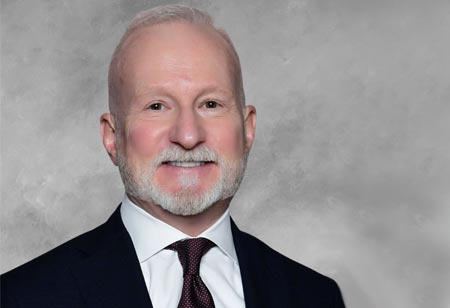
Victor Young, SVP - Development/Construction Management
Building Successful Construction Projects With Clarity And Proactiveness

Victor Young
The Core Focus in Successful LargeScale Project Delivery
I have learned that every project, regardless of its size, faces the same challenges and common denominators as its peer projects. There are fundamental prerequisites that require intentionality, and if we are not paying attention to those, it seems all other efforts have diminishing returns at every level.
The key prerequisite and driver of excellent project management is communication. It is the lifeline of every critical issue, and poor communication can wreck the best of intentions. It is always better to overcommunicate, especially regarding complex issues, than to have a miscommunication that can cause irrecoverable losses to your schedule and/or budget.
Then there is the matter of how you communicate, and I feel like this is even more important. People don’t hear you as well when you are condescending, too aggressive, or just plain hard to deal with. Also, people tend to tune you out if you are not concise and efficient, because most folks will only give you a short window of attention before they are ready to move on to something else. Today’s culture of immediacy and on-demand answers has exacerbated communication issues. The human connection continues to have paramount importance in managing projects, and I see no suitable replacement for that anytime soon.
At the highest level, communication is not just coordination but risk control. The earlier issues are identified, the more optionality you preserve, and the more effectively you protect schedule, budget, and ultimately your investor’s capital.
Design Decisions Affecting Construction Projects
With the pressure of interest rates today, making educated design decisions has more importance than one may realize. For example, you might evaluate a VE (cost savings) idea to use stucco or masonry in lieu of curtain wall or window wall on a high-rise building, but when you factor in the added requirements in means and methods that cause schedule impacts, you might not be saving money.
Or worse, you might actually be paying more for an inferior product, by adding months to the project schedule (and increasing Contractor’s GCs/GRs and capital carry costs) while making it harder to achieve dry-in and control the critical path.
In today’s environment, design decisions are no longer just about first cost. They directly impact schedule, capital exposure and ultimately investor returns. What appears to be a cost savings on paper can become a material impairment once schedule extension and carry costs are fully understood.
Successful projects are not defined by avoiding challenges, but by how early and how clearly those challenges are identified and managed.
Handling Project Timelines, Cost Control and Quality Standards
In the projects we are delivering, quality has to be there, and that is nonnegotiable. Otherwise, we risk devaluing our investment and asset. That means that we must find a way to achieve the highest quality standards while managing time and money, and it is never easy.
This is where proactive, hands-on project management with a sense of urgency is of utmost importance. Everything matters, from the smallest detail on a cabinet pull to the items with more implications, like the selection of mechanical systems.
Quality is non-negotiable because it directly underpins longterm asset value and exit performance. Compromising quality may solve a short-term budget issue, but it often introduces longterm risk to revenue, leasing velocity, and disposition.
Guiding Cross-Functional Teams Through Complex Development Initiatives
Number one for me is the intangible “energy” or “personality” of a project, at all levels. Whether you are in the predevelopment phase managing design, or executing construction in the field, the project’s overall morale (which can also be described as attitude, demeanor, state of the union, etc.) will have a bigger impact than any other single item. If the team’s overall mojo is broken, then you can bet that you are working at reduced capacity and efficiency across all disciplines of the project.
Attitude, effort, and effectiveness are directly affected by the leadership we provide. I feel like we have to create and maintain an environment that supports the project team and motivates them to work in the best interest of the project. That approach needs to start at the top level of leadership and be adopted by the team.
Advice for Success in Construction Development and Management
Raise your hand early and often. Take on hard assignments, even if you feel like you are not qualified for them. Become an irreplaceable asset to the project and your employer. Be a problem solver and take ownership of the issues in your area of influence.
When you get in over your head, find someone with more experience and ask for their advice and counsel. I have always found that the trade partners (subcontractors) are great teachers because they are true experts in their respective fields, so lean on them and learn from them.
And finally, when you are in the middle of a tough situation, don’t have the perspective of “I can’t believe I have to do this” …instead think “I can’t believe I get to do this”.
As your career progresses, your role shifts from solving problems yourself to building systems and teams that prevent problems before they occur.
Over time, I’ve come to believe that successful projects are not defined by avoiding challenges, but by how early and how clearly those challenges are identified and managed. The industry has traditionally been reactive, but the future of development is proactive, where data, experience, and disciplined processes are used to anticipate risk before it impacts outcomes. That shift is where the greatest value is created for investors.
The articles from these contributors are based on their personal expertise and viewpoints, and do not necessarily reflect the opinions of their employers or affiliated organizations.
Unlocking Your Potential: 5 Keys to Advancing Your Career in Property Management
Leanne C. Reynolds, Director, Property Management, Colliers [NASDAQ: CIGI]
-450x308_V16N.jpg)
The Internet of Drones: Redefining Construction in the age of Intelligence
Paul Doherty, President and CEO, the digit group, Inc.

From Incident to Insight in Safety Leadership
Matthew Shearer, Director of Environmental Health & Safety, Cash Construction Company, Co.

Keeping Projects on Track: Goals, Balance, Code, Technology, and Leadership
Daniel G. Murtagh, Vice President of Engineering, BXP


Building Strong Safety Cultures Across Complex Construction Projects
Curtis Corley, Director of Safety - South, AECOM Hunt
Building Projects through People, Planning and Culture
Ben McCafferty, Project Manager, Shook Construction

Operational Groundwork, Strategic Impact: A New Era of Real Estate Leadership
Kalinka Ivanova, RPA, CCIM, MBA, Vice President Real Estate Development, HOLT Group