Thank you for Subscribing to Construction Business Review Weekly Brief

Tricon Residential
Larry Kiradziev, SVP of Enterprise Architecture
From Strategy to Structure: The Role of Enterprise Architecture in Business Growth
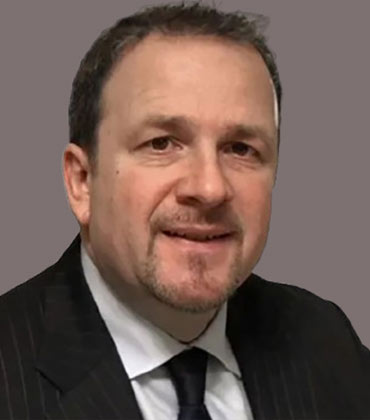
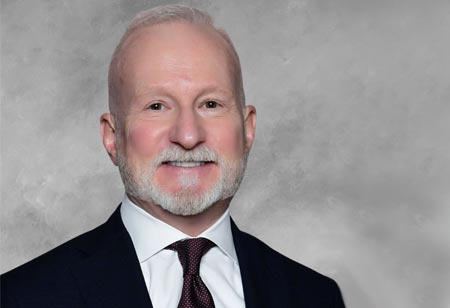
Larry Kiradziev
Senior Vice President of Enterprise Architecture at Tricon Residential, Larry Kiradziev leads strategic technology transformations that drive company growth and digital evolution. He began his career as an independent contractor before moving into consulting with a Toronto-based firm, where he learned the importance of demonstrating value beyond results. That lesson became a guiding principle throughout his career. Whether serving as a consultant or part of an internal IT team, Larry has focused on translating technology efforts into tangible business outcomes, ensuring that clients, customers and partners clearly recognize the value delivered through his leadership and expertise.
Ensuring Enterprise Architecture Aligns with Business Vision and Goals
Fundamentally it starts with communication. It is imperative to understand that IT can influence a business decision but is also driven by a business strategy and therefore to gain that common alignment, communication is key. Over the years, one common theme I have learned from peers and mentors is that you have to run IT as if it were a business and therefore you have to embrace approaches that external vendors use such as Quarterly Business Reviews (QBRs) to ensure that the efforts are driving value.
Balancing Formal Frameworks with Real-World Outcomes in Enterprise Architecture
The common question when dealing with the business is always “What do you do in IT”. Many people then immediately focus on describing their technical skills or soft skills with an IT lens. The reality is in my opinion that everyone, regardless of industry they work in, should always provide an answer similar to the following: “To develop, acquire, deploy and manage technology solutions to improve productivity and generate positive business outcomes” . That should be the mission statement. So with that emphasis at the forefront, IT professionals must be able to demonstrate the accomplishment of that mission vs dogmatically insisting on following a specific framework because it is an academically accepted practice. The framework is the means to an end, not the end itself and I feel that many IT professionals lose sight of the real objective which is to achieve business outcomes, not institutionalize frameworks because of an academic argument.
How Enterprise Architects Turn Strategy into Structure
The “textbook” answer that comes to mind for most Enterprise Architects is to foster continuous communication with business leaders, anchor architecture in measurable business goals and KPIs and engage stakeholders early using data-driven insights and visual models. Key strategies often include applying standardized EA frameworks such as TOGAF, prioritizing flexibility and scalability and implementing governance structures that enable collaboration while ensuring strategic alignment.
However, like most textbook answers, this is easier said than done. Real success depends on strong relationship management.
Unless activities clearly demonstrate value through measurable outcomes, any emerging practice—whether enterprise project management, cybersecurity, risk management or enterprise architecture—will quickly lose relevance because value was not demonstrated.
Achieving this requires spending meaningful time with the business, understanding what drives their needs and shaping perspectives accordingly. The stereotype of “ivory tower architecture” exists because too many practitioners spend endless energy defending abstract principles instead of driving tangible outcomes.
This does not mean discarding academic knowledge altogether. Rather, it calls for applying it through a pragmatic lens, focusing on results and tailoring approaches to achieve business impact.
It comes down to embracing the reality that change is constant and remaining flexible in how we respond to it.
How to Keep Enterprise Architecture Agile in a Fast-Changing Tech World
It comes down to embracing the reality that change is constant and remaining flexible in how we respond to it. The rapid acceleration of AI in recent years has forced the industry to adapt quickly, but this is not the first disruption we’ve faced. Over my 30-plus-year career, I’ve seen many transformative shifts in technology.
At its core, maintaining relevance requires flexibility in governance, treating architecture as a living, evolving deliverable rather than a static, rigid artifact. It means adopting a philosophy of perpetually emergent design that adapts continuously to meet changing business and environmental needs.
The rise of cloud computing illustrates this evolution well. We moved from lengthy planning cycles for on-premises data centers to cloud services that can be deployed on demand. This shift required a pivot toward more responsive approaches. Planning is still essential, but the paradigm has changed. Today, it is about establishing guardrails that prevent serious consequences while allowing for a more fluid, dynamic and rapidly changing technology environment.
Guidance for IT Leaders Seeking to Drive Change and Establish Standards
When it comes to setting standards, my experience across industries has shown that standards are often promoted only until they become inconvenient. At the first sign of resistance, they are quickly discarded.
The focus, instead, should be on driving meaningful change. To do this, we must return to the principle I outlined earlier: the role of IT is to “develop, acquire, deploy and manage technology solutions that improve productivity and generate positive business outcomes.”
We are brought into organizations to deliver change through this lens. When we prioritize academic debates over the practical application of standards, we risk becoming barriers rather than enablers of business progress. Our responsibility is to improve the present and build a better tomorrow by applying best practices—not by placing them on a pedestal.
This requires fostering a culture of collaboration and responsiveness, one that emphasizes outcomes over the pursuit of a textbook-perfect strategy that may already be obsolete by the time it is complete. That is why I am a firm believer in the phrase, “Culture eats strategy for breakfast.” Though often attributed to Peter Drucker without definitive proof, it remains a truth I have witnessed repeatedly throughout my career. In my view, the most successful leaders are those who understand and embrace this reality.
The articles from these contributors are based on their personal expertise and viewpoints, and do not necessarily reflect the opinions of their employers or affiliated organizations.
Unlocking Your Potential: 5 Keys to Advancing Your Career in Property Management
Leanne C. Reynolds, Director, Property Management, Colliers [NASDAQ: CIGI]
-450x308_V16N.jpg)
The Internet of Drones: Redefining Construction in the age of Intelligence
Paul Doherty, President and CEO, the digit group, Inc.
From Incident to Insight in Safety Leadership
Matthew Shearer, Director of Environmental Health & Safety, Cash Construction Company, Co.

Building Successful Construction Projects With Clarity And Proactiveness
Victor Young, SVP - Development/Construction Management, Kairoi Residential

Keeping Projects on Track: Goals, Balance, Code, Technology, and Leadership
Daniel G. Murtagh, Vice President of Engineering, BXP
Building Strong Safety Cultures Across Complex Construction Projects
Curtis Corley, Director of Safety - South, AECOM Hunt
Building Projects through People, Planning and Culture
Ben McCafferty, Project Manager, Shook Construction